

Jordyn Koveleski Gorman, MS, SLP
Speech-Language Pathologist and Feeding Specialist, Founder of Eat Play Say
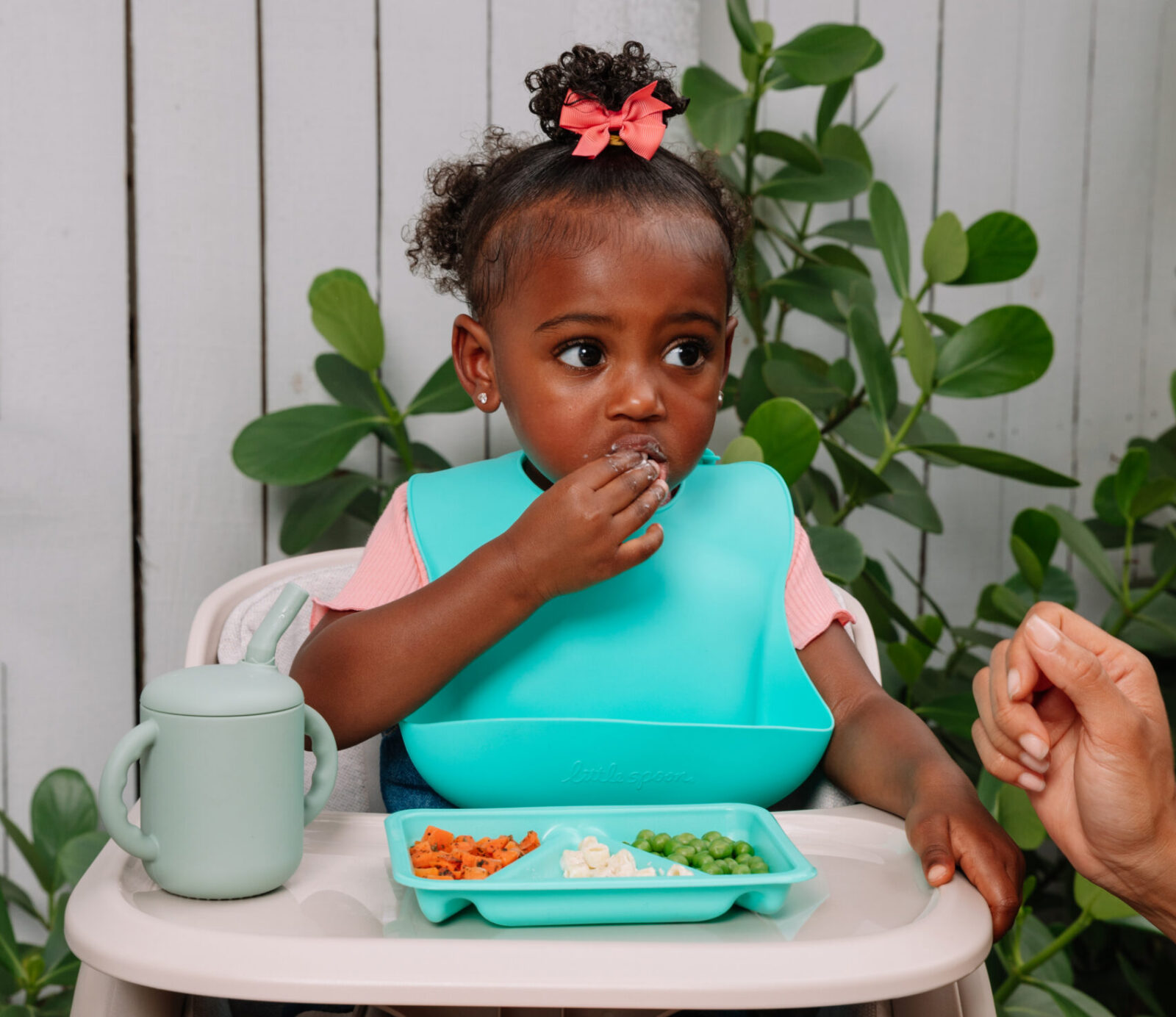
Starting solid foods is such an exciting part of watching your baby grow and develop! Understandably, many parents worry about gagging and choking when beginning baby-led weaning or offering purees. Knowing a few key distinctions between choking and gagging can help parents spot the difference and feel confident about when to intervene versus when to let their little one work through it on their own.
The difference between choking and gagging
Choking is a medical emergency that occurs when an object obstructs the airway either partially or fully. Gagging, on the other hand, is a reflex that occurs when the muscles at the back of the tongue and throat contract. In fact, gagging is the body’s built-in way to prevent choking!1
Parents can spot the difference by paying attention to the signs of each.
Gagging tends to be quite noisy. Other signs of gagging include:
- A short, singular cough or temporary burst of a few mild coughs
- Tongue protrusion
- Retching
- Food or object falling out of mouth
- Vomiting
Gagging usually does not require intervention, though this can be a good time to model spitting something out (which can be a helpful skill as your child begins putting objects in their mouth).
Signs of choking in infants include:
- Blue skin color
- Inability to cry or make much sound
- Difficulty breathing, with their ribs and chest pulling inward
- Weak, ineffective coughing
- Soft or high-pitched squealing sounds while attempting to inhale
- Panicked, surprised, or confused expression
- Loss of consciousness
If you suspect your baby might be choking but they are able to produce a strong cough, it’s important to encourage them to keep coughing. They might be able to clear the blockage on their own. If your child is unable to cough or displays other signs of choking from above, call 911 and administer first aid while waiting for emergency responders.
Gagging and baby-led weaning
Did you know that starting solids often leads to a temporary increase in gagging episodes? In the first few months of life, a baby’s gag reflex extends all the way toward the tip of the mouth.1 This can be seen in the way a young infant may sometimes gag even before a bottle or nipple reaches their mouth.
By the time your baby begins solids, the gag reflex has moved toward the middle of the mouth and is less sensitive.4 Remember, it’s normal for there to be a brief increase in gagging as solids are introduced. Over time, the response should decrease, and by around 1 year of age, the gag reflex settles toward the back of the mouth, the same as an adult’s.4
Feeding Specialist Tip: The more opportunities that babies have to safely explore their mouth, such as playing with teethers or learning to chew foods, the sooner the gag reflex can integrate and reduce intensity.
How do handheld strips of food help babies with gagging?
Parents are often surprised when starting baby-led weaning because the recommended size of finger foods is quite large. Instead of small, bite-sized pieces, it’s recommended to begin with larger slices or sticks of soft, easily mashable foods. There are a few reasons for this.
First, when babies start solids around 6 months of age, they have not yet developed the pincer grasp that allows them to grasp small bites of food. The raking grasp develops first, usually between 6–9 months of age.3 Resembling its name, the raking grasp involves using an open hand to scrape an object into the palm. Because this raking grasp isn’t effective for picking up small items, larger holdable foods are best when starting baby-led weaning.
Most babies develop the pincer grasp between 9–12 months.3This skill coincides with about the time that babies are usually able to begin taking some smaller bites of food. Until then, sticking with larger, holdable pieces of baby-safe foods is best.
Another reason for starting with larger food pieces is that babies are just beginning to “map” their mouths as they use teethers and eat solids for the first time. This newfound oral-motor development means that the baby doesn’t yet know how to chew or move food in their mouth. Starting with small chunks of food would be more difficult for babies because smaller pieces are harder to manage in the mouth.
Some great first foods to try when baby-led weaning include:
- Avocado slices
- Banana slices
- Strips of steamed sweet potato (without skins)
- Oatmeal served on a preloaded baby spoon
- Omelet-style eggs served in strips
Choking and baby-led weaning
Although it may seem like offering a baby handheld foods at the start of eating solids would increase choking risks, research actually shows that choking risks with baby-led weaning are about the same as risks associated with traditional weaning. 1
Ensuring that foods are served safely is important for reducing choking risks. For instance, some common choking hazards should be avoided entirely when first beginning baby-led weaning, while other foods can be sliced or modified to be served more safely.
Foods that are safest to avoid or that require modification when starting solids include:
- Hot dogs
- Grapes
- Cherry/grape tomatoes
- Cherries
- Globs or chunks of melted cheese, nut butters, or other “gummy” foods
- Small cubes/blocks of cheese
- Raw vegetables cut into circles, like carrots
- Whole nuts and large seeds
- Popcorn, chips, pretzels, or hard crackers
- Candy and marshmallows
These foods can be safely served over time, though some of these foods (like popcorn) are not recommended until children reach preschool age.
Frequently Asked Questions
Is gagging during baby-led weaning dangerous?
No. Gagging is a protective mechanism that signals the muscles in your baby’s throat to contract in order to move an object forward on the tongue. Although it can look and sound alarming, gagging helps your baby stay safe while learning how to chew and swallow food.
How can I tell the difference between choking and gagging?
Choking involves your child’s airway, while gagging involves the muscles in their mouth and throat. If your child is choking, they will have trouble breathing or not be able to breathe at all. If your child gags, their breathing will not be impacted. Listening to their breathing and visually
monitoring them during meals can help parents quickly assess if their child is choking or gagging.
Does baby-led weaning cause babies to choke or gag?
Research indicates that baby-led weaning carries about the same risk of choking as parent-led feeding. (1) Gagging commonly occurs more frequently when first starting solids, regardless of method. If caregivers offer baby foods they are not yet developmentally ready for, gagging or choking could occur.
Baby-led weaning can also reduce some episodes of gagging because the baby is able to choose what food goes into their mouth and how much. When a caregiver spoon-feeds a baby, they are more likely to offer bites when the child is not interested or ready, which can lead to gagging episodes.
Is gagging ever a sign of something else?
It can be! Although most gagging in infants is normal and okay, excessive gagging can point to some other issues that require evaluation by a specialist. If gagging leads to your child throwing up or refusing to eat a food entirely, it is recommended to speak with a healthcare professional, such as your child’s pediatrician or a feeding specialist.
Don’t start solids alone
Starting solids is better with help. Little Spoon is proud to partner with parents on their little one’s feeding journey. Keeping your child safe and supporting positive feeding experiences starts with knowing when your baby needs a hand.
Ensuring that caregivers know the difference between gagging and choking can help keep your child safe when starting baby-led weaning, as well as give you peace of mind. Keep this information in mind when considering what foods to offer and how to safely serve them to your baby. Little Spoon can help you get started with organic, heavy-metal-tested purees foods that support your little one’s growth and development.
Learn more here: https://www.instagram.com/reel/DaVOg8WRgFg/?utm_source=ig_web_copy_link&igsi=MzRlODBiNWFlZA%3D%3D
Sources
- Arvedson JC. Complementary feeding in the first year of life: choking and gagging; what about nutrition? J Pediatr (Rio J). 2023 Nov-Dec;99(6):534-536. doi: 10.1016/j.jped.2023.08.002. Epub 2023 Sep 9. PMID: 37696494; PMCID: PMC10594011.
- MedlinePlus. Bethesda (MD): National Library of Medicine (US); Choking – Infants Under 1 Year; Reviewed 10 February 2026; cited 4 August 2026; Available from: https://medlineplus.gov/ency/article/000048.htm
- Jennifer M. Zubler, Lisa D. Wiggins, Michelle M. Macias, Toni M. Whitaker, Judith S. Shaw, Jane K. Squires, Julie A. Pajek, Rebecca B. Wolf, Karnesha S. Slaughter, Amber S. Broughton, Krysta L. Gerndt, Bethany J. Mlodoch, Paul H. Lipkin; Evidence-Informed Milestones for Developmental Surveillance Tools. Pediatrics March 2022; 149 (3): e2021052138. 10.1542/peds.2021-052138
- Ed, Naylor, & Morrow, Ardythe. (2001). Developmental Readiness of Normal Full Term Infants To Progress from Exclusive Breastfeeding to the Introduction of Complementary Foods: Reviews of the Relevant Literature Concerning Infant Immunologic, Gastrointestinal, Oral Motor and Maternal Reproductive and Lactational Development.