


You’ve mastered milk feeds, starting solids is beginning to feel like second nature(-ish) and now it’s time to introduce allergens. For many parents, this step can feel overwhelming, especially when it comes to peanuts.
Fortunately, years of research has shown that introducing peanuts (and other common allergens) early and regularly can help reduce the risk of developing food allergies later.
We’re breaking down what the science says about peanut introduction, how to safely offer them to your baby and practical ways to make them a regular part of your baby’s diet.
When to introduce peanuts to your baby
Current guidelines recommend introducing peanuts, along with the other common food allergens, once your baby is developmentally ready to start solid foods. For most babies, that happens somewhere between 4 and 6 months.
Look for these signs:
- Sitting up with minimal support
- Good head control
- Putting everything in the mouth
- Interest in what you’re eating
Why introducing peanuts early + often matters
For years, parents were told to delay peanut introduction, especially for high-risk babies. But recent studies have shown that introducing peanuts early and offering them regularly can help lower the risk of developing a peanut allergy later on, particularly in babies with severe eczema or an existing egg allergy. And once your baby successfully tolerates peanuts, keep them on the menu regularly to maintain exposure.
What to do if your baby is at high risk for a peanut allergy
If your baby has severe eczema or an egg allergy, it’s a good idea to touch base with your pediatrician or an allergist before offering peanuts. They can help you decide on the best timing, and in some cases, may recommend allergy testing or supervised introduction.
If your baby isn’t considered high risk, you can discuss peanut introduction at their next checkup. Having a conversation with your pediatrician can make the process feel less intimidating and give you more confidence when it’s time to introduce new foods.
Tips on introducing peanuts to your baby
Safety first, always. Whole peanuts, peanut pieces and thick spoonfuls of peanut butter are choking hazards and should never be offered to babies.
- For babies 4 to 6 months: Mix powdered peanut butter or smooth, thinned peanut butter (thinned with breast milk, formula, or water) into baby oatmeal, yogurt or smooth purees.
- For babies 6+ months: Continue offering thinned peanut butter or peanut butter powder mixed into foods. If you’re doing baby-led weaning (BLW), spread a thin layer of thinned peanut butter on lightly toasted bread strips or mix it into pancake or muffin batter.
A few more tips to make peanut introduction feel less stressful:
- Offer peanuts for the first time at home and earlier in the day. This gives you plenty of time to observe your baby for a potential reaction.
- Avoid introducing peanuts right before a nap. You don’t want to wonder if your baby is cranky because they’re tired or because they’re having a reaction.
- Skip it if your baby is sick, and wait until they’re back to their happy, usual selves.
- Know what an allergic reaction looks like (more on this below!)
- For extra extra peace of mind, you can introduce peanuts on the same day as a pediatrician appointment or when medical care is readily accessible.
How to handle allergic reactions
Peanuts are one of the most common causes of severe allergic reactions. Reactions can happen after eating peanuts or through exposure, like inhaling airborne food particles. Every child reacts differently, with symptoms ranging from mild to severe.
Here are some signs to watch for:
- Skin: Itchy skin, swelling or hives.
- Gastrointestinal: Diarrhea, nausea, vomiting, abdominal pain or trouble swallowing.
- Breathing: Sneezing, wheezing, throat tightness, trouble breathing or signs of anaphylaxis.
Severe allergic reactions can be life-threatening. Call 911 or emergency services if you notice symptoms like severe swelling, trouble breathing or signs of anaphylaxis.
- Stir powdered or thinned peanut butter into baby oatmeal, yogurt, cottage cheese or purees
- Mix into cooked grains
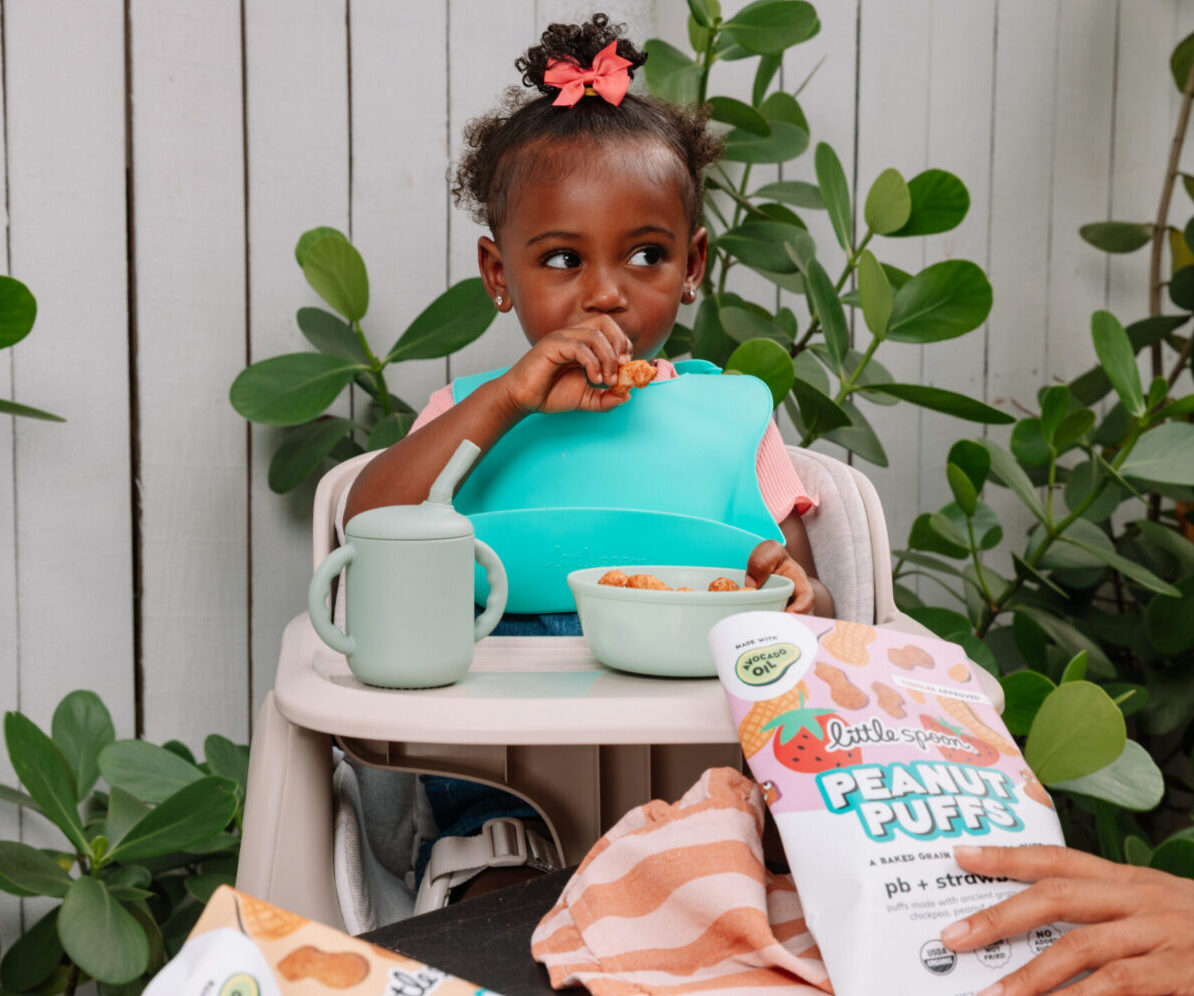
- Try Little Spoon’s hidden veggie Peanut Puffs
- Spread a thin layer of thinned peanut butter on lightly toasted bread or pancake strips
- Bake into pancakes, muffins and waffles
- Stir into mashed sweet potato, banana or avocado
- Use as a dip for soft fruit slices or Puffs
- Add to overnight oats or chia pudding
- Blend into smoothies
- Stir into pasta sauce
You’ve got this
Introducing peanuts is a big milestone, and once you’ve got the hang of it, introducing the other common allergens will likely feel much more manageable. As always, if you have questions or concerns, your pediatrician can help guide you along the way.
FAQs
What are the common allergens?
The top 9 allergens are peanuts, tree nuts, shellfish, fish, sesame, dairy, wheat, soy and egg.
How are food allergies diagnosed?
Your pediatrician will order a skin or blood test if they suspect a food allergy.
Can kids outgrow food allergies?
Yes! Some kids outgrow their food allergy—typically by age five.
What are food allergies?
Food allergies happen when the immune system reacts to a protein in a food.
What is a food sensitivity?
A food sensitivity is different from a food allergy. Food sensitivities do not involve an allergic reaction, and there is no immune response. Food sensitivities are typically caused by a difficulty digesting certain nutrients.