


If your baby’s first year feels like one long game of questioning whether you’re doing anything right, you’re definitely not alone. One minute you’re figuring out how to change a diaper blowout, and the next you’re wondering how to survive on three hours of sleep. And just when you feel like you’ve finally figured out a routine, their schedule changes and everything you worked so hard to establish disappears overnight. Ah, parenthood.
And feeding is no exception. One day, it’s all about breast milk or formula. Then, suddenly you’re introducing solids, questioning textures, worrying about allergies and wondering whether they actually swallowed anything at all.
You don’t have to figure it out alone. You just need clear, practical guidance. Here’s everything you need to know about feeding your baby in year one—from those first milk-only months through starting solids and beyond.
Key Takeaways
Before we dive into the details, here’s what you need to know about feeding your baby in their first year:
- 0–6 Months: Breast milk or formula exclusively, feeding on demand based on your baby’s hunger cues
- Starting Solids (6 months): Begin with 1 meal per day, focusing on iron-rich foods while continuing breast milk or formula
- Allergen Introduction: Start common allergens at 6 months and offer them regularly to help reduce allergy risk
- Feeding Methods: Choose spoon-feeding, baby-led weaning, or a combination approach that works for your family
- One-Year Transition: Work toward 3 meals plus 1-2 snacks daily, limiting milk to 16 ounces per day
The First 6 Months: Building the Foundation
For the first half year, your baby will receive all of their nutrition from breast milk and/or formula. According to the American Academy of Pediatrics, babies should be exclusively breastfed or formula-fed until around 6 months of age, when they show signs of developmental readiness for solid foods.
During the early days, feeding is all about responding on demand, which basically means whenever your baby says it’s time to eat, it’s time to eat! Babies are surprisingly good at telling you when they’re hungry and when they’re full. The trick is learning to spot their hunger and fullness cues before things escalate (AKA lots of crying!).
Signs Your Baby Is Hungry
Your baby will communicate hunger long before they start crying. Watch for these early signals:
- Licking lips
- Sticking out tongue
- Rooting (moving their head and opening their mouth in search of a nipple)
- Bringing hands to their mouth or sucking on fingers
- Fussiness
- Clenched fists
- Crying (usually a late stage of hunger)
Signs Your Baby Is Full
Just as important as recognizing hunger is respecting fullness cues:
- Turning head away from bottle or breast
- Closing mouth
- Stopping sucking
- Relaxed fists and body
- Appearing content or drowsy
Every baby is different. Some eat more, some eat less. Some space out feeds, others prefer smaller, more frequent ones. Growth spurts can also temporarily increase their appetite. If you ever feel unsure about how much breast milk or formula your baby needs, your pediatrician can help guide you.
Is Your Baby Ready for Solids?
At 6 months, your baby may be ready to try solid foods. According to the CDC, babies are developmentally ready for solids when they show these signs:
- Sitting with support: Your baby can sit upright in a high chair with good stability
- Good head and neck control: They can hold their head steady without wobbling
- Interest in food: They watch you eat and may reach for your food
- Loss of tongue-thrust reflex: They no longer automatically push food out of their mouth with their tongue
If your baby is showing these signs of developmental readiness, it’s go time. But don’t worry—milk time isn’t over yet.
How Much Should a 6-Month-Old Eat When Starting Solids?
Your baby should still get most of their nutrition from breast milk and/or formula. You’re not replacing milk feeds—you’re adding solid foods to support their growing nutritional and developmental needs, like building their chewing and swallowing skills, strengthening fine motor skills, and expanding their palate with new flavors and textures.
And how much will they actually eat? Not much at first. Here’s what to expect:
Recommended Feeding Schedule
- 6 Months: 1 solid meal per day (1–2 teaspoons to a few tablespoons is normal)
- 7–8 Months: 2 solid meals per day
- 9–10 Months: 3 solid meals per day
- 12 Months: 3 solid meals plus 1–2 snacks per day
Portion Framework
Start with 1–2 teaspoons and gradually increase to a few tablespoons per meal as your baby shows interest. Follow your baby’s hunger and fullness cues—intake varies widely from baby to baby, and that’s completely normal. Remember, breast milk or formula remains the primary source of nutrition throughout the first year.
Sample One-Day Schedule (6 Months)
Here’s what a typical day might look like when you’re just starting solids:
- 7:00 AM – Breast milk or formula feed
- 9:00 AM – Solid food practice (2-3 tablespoons of iron-fortified cereal or pureed vegetables)
- 11:00 AM – Breast milk or formula feed
- 2:00 PM – Breast milk or formula feed
- 5:00 PM – Breast milk or formula feed
- 7:00 PM – Breast milk or formula feed
This is just a starting point. Your baby’s schedule may look different, and that’s okay. The key is maintaining regular milk feeds while introducing one solid meal.
Best First Foods for Baby (6 Months)
When you’re choosing what to offer your baby, variety matters. Research shows that exposure to different colors, flavors, and textures from different food groups early on helps expand their palate and increases acceptance of new foods over time.
Here are the best first foods to prioritize, organized by nutritional purpose:
Iron-Rich Foods (Essential Starting at 6 Months)
According to the American Academy of Pediatrics, babies need 11 mg of iron per day starting at 6 months for healthy growth and brain development. Breast milk and formula don’t provide enough iron at this stage, making iron-rich foods a top priority.
- Iron-fortified baby cereal: Mix with breast milk or formula for a smooth texture (Little Spoon’s organic baby cereal is specifically formulated with the iron babies need)
- Pureed or finely shredded beef: Rich in highly absorbable heme iron
- Chicken: Soft, shredded pieces or smooth puree
- Lentils: Mashed or pureed, excellent plant-based iron source
- Eggs: Scrambled soft or mashed (also a common allergen to introduce early)
Omega-3 Rich Foods (For Brain Development)
The WHO emphasizes the importance of omega-3 fatty acids (DHA and EPA) for supporting brain health and cognitive development.
- Salmon: Flaked into tiny pieces or pureed (choose wild-caught when possible)
- Chia seeds: Ground and mixed into purees or cereal
- Flaxseed: Ground and added to other foods
Nutrient-Dense Fruits and Vegetables
Since babies generally eat small amounts, nutrient-dense foods provide a lot of nutrition in a single bite.
- Avocado: Soft strips for baby-led weaning or mashed for spoon-feeding; rich in healthy fats
- Sweet potato: Steamed until very soft, mashed or cut into finger-length strips
- Banana: Soft and naturally sweet, easy to mash or serve as spears
- Steamed broccoli: Soft florets, excellent source of vitamin C and fiber
- Butternut squash: Roasted or steamed until tender, naturally sweet
- Pear: Steamed or very ripe, mashed or in strips
- Berries: Mashed to prevent choking (blueberries, strawberries)
Spoon Feeding Your Baby: The Traditional Approach
There are a few ways to start solids and none of them are wrong. Let’s start with spoon-feeding, which is the traditional method of introducing solids. With spoon-feeding, you offer your baby pureed foods using a spoon. This approach works well for many families, and it can be really rewarding to watch your baby discover new flavors and learn how to eat.
Tips for Successful Spoon-Feeding
- Start with thin purees: Begin with smooth, thin consistencies and gradually thicken them as your baby gets comfortable
- Progress to thicker textures: Move from smooth purees to mashed foods with small, soft lumps
- Introduce soft finger foods before 9 months: According to feeding experts, waiting too long to introduce varied textures can make it harder for your baby to accept them later on
- Let baby set the pace: Offer the spoon and wait for your baby to open their mouth—never force feed
- Watch for cues: Stop when your baby shows signs of fullness, even if the bowl isn’t empty
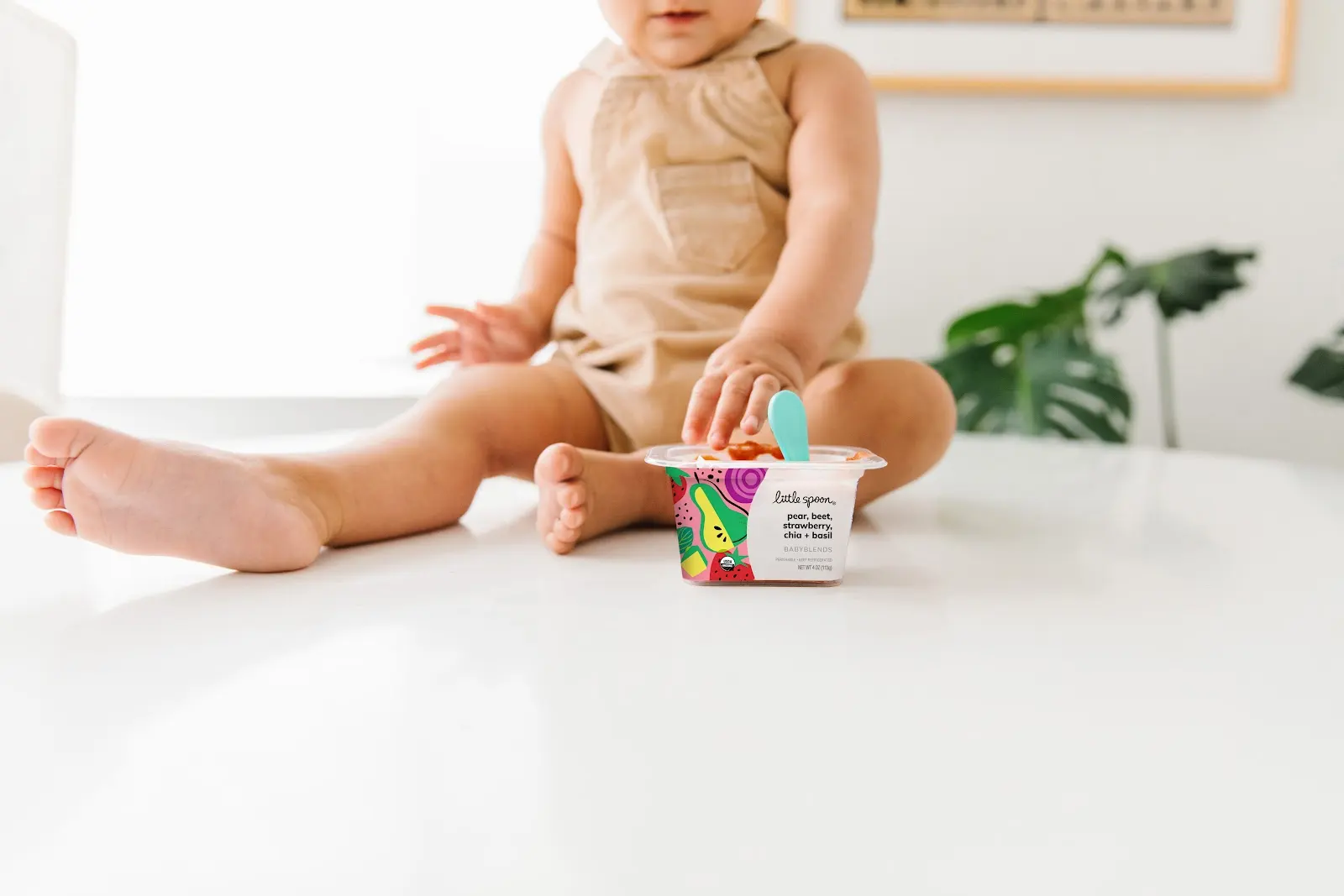
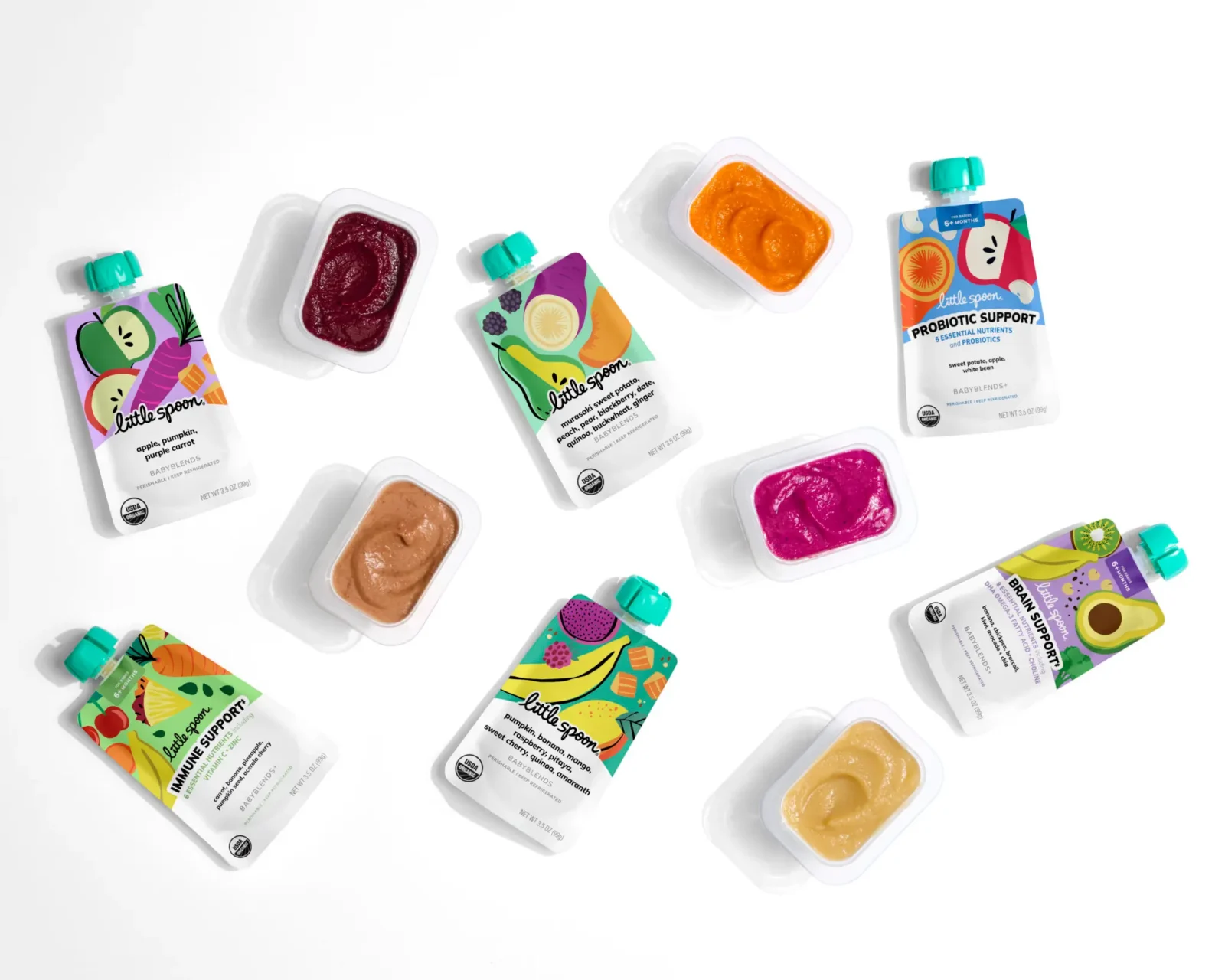
Babyblends make spoon-feeding easier with organic, nutrient-dense purees that progress through different texture stages. From smooth first blends to chunkier options, each recipe is designed to support your baby’s developmental stage.
Best Baby-Led Weaning Foods at 6 Months (and How to Cut Them)
Some parents prefer baby-led weaning (BLW), where babies start solids by self-feeding soft finger foods instead of being spoon-fed. This approach, supported by research from pediatric feeding specialists, helps babies practice independence at mealtime while exploring multiple textures from the very beginning.
Baby-Led Weaning Guidelines
Food Texture: Make sure foods are soft enough to squish between your fingers. If you can’t easily mash it, it’s not soft enough for your baby.
Food Shape Matters:
- At 6 months: Babies use their whole hand (the palmar grasp) to pick up food, so long, spear-shaped pieces work best. Think banana spears, roasted sweet potato wedges, or steamed carrot sticks about the length of your finger.
- By 9 months: Babies start using their pincer grasp (thumb and index finger) to pinch smaller pieces of food. At this stage, you can offer pea-sized pieces like shredded chicken, small pasta shapes, or soft diced vegetables.
Safe First Foods for Baby-Led Weaning
- Avocado spears: Cut lengthwise into thick strips
- Steamed sweet potato wedges: Soft enough to squish, easy to grip
- Banana: Cut in half with some peel left on one end for grip
- Steamed broccoli florets: With enough stem to hold
- Roasted butternut squash spears: Cut into finger-length pieces
- Well-cooked pasta: Large shapes like rigatoni or penne
- Soft-cooked egg strips: Scrambled or omelet cut into strips
- Steamed apple slices: Cooked until very soft
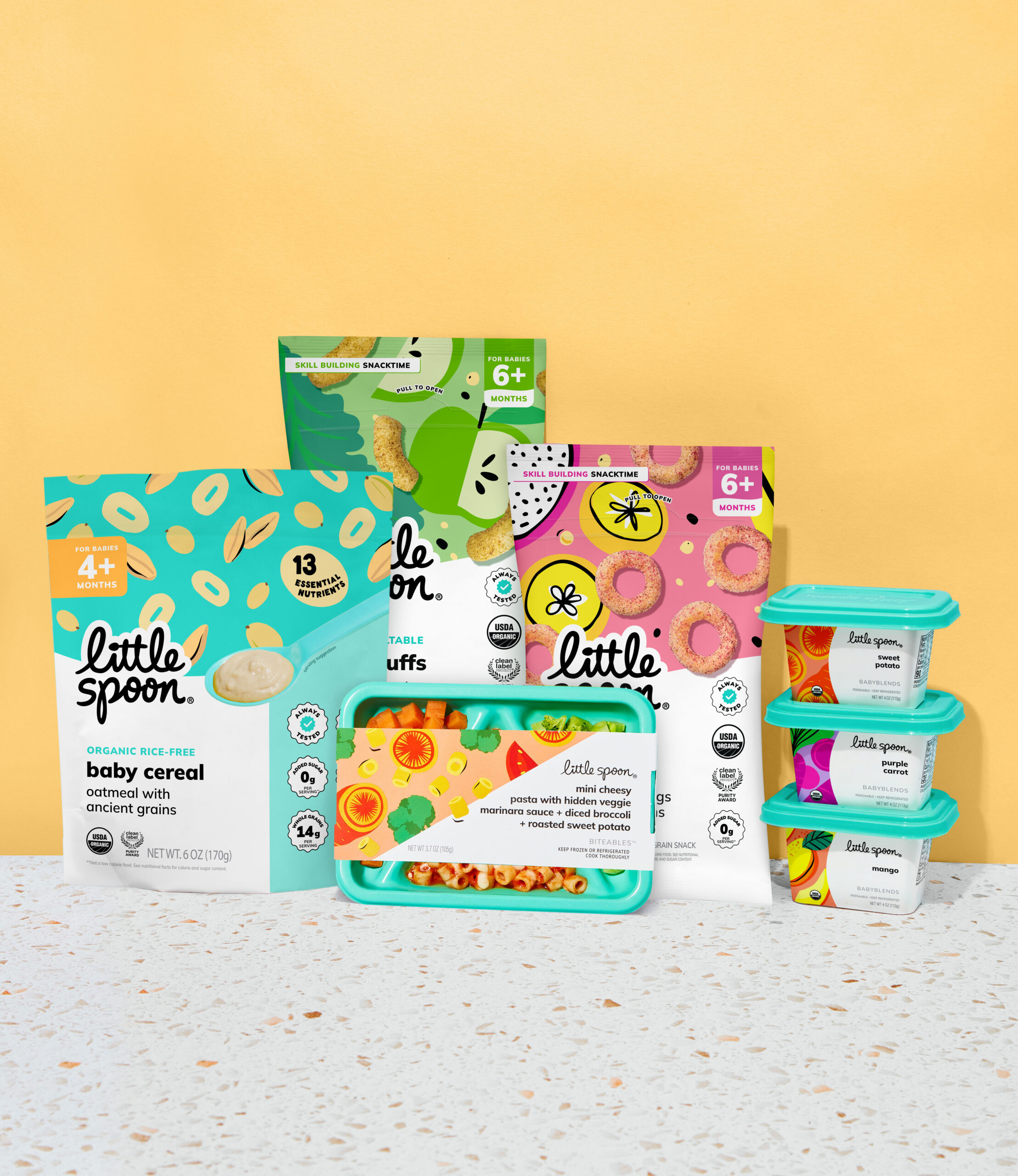
For families who want the convenience of prepared foods with a BLW approach, Little Spoon’s Biteables offer soft, dissolvable pieces that are perfectly sized for little hands learning to self-feed.
Combining Spoon Feeding and Baby-Led Weaning
You don’t have to pick one approach, and many families successfully combine spoon-feeding and baby-led weaning. You can offer purees with a spoon while also letting your baby explore soft finger foods at the same meal. The key is to find a method that feels manageable for you and works for your baby.
For example, you might offer a spoonful of iron-fortified cereal or pureed vegetables while also placing soft avocado strips or steamed sweet potato on your baby’s tray to explore. This combination approach gives your baby the nutritional benefits of nutrient-dense purees while building the fine motor skills and independence that come with self-feeding.
Every baby is different, so mix and adjust as you go! Some days your baby might prefer the spoon, other days they’ll want to feed themselves. Follow their lead and remember that messy exploration is part of the learning process.
Introducing Allergens: A Step-by-Step Protocol
Six months is also the ideal time to introduce common allergens. According to guidelines from the American Academy of Allergy, Asthma & Immunology, offering these foods early and regularly can help reduce the risk of developing food allergies.
The Nine Major Allergens
- Milk
- Wheat
- Egg
- Soy
- Sesame
- Tree nuts
- Peanuts
- Fish
- Shellfish
How to Safely Introduce Allergens
Follow this step-by-step protocol recommended by pediatric allergists:
- Introduce one new allergen at a time: This helps you identify which food caused a reaction if one occurs
- Offer during daytime hours: Introduce new allergens in the morning or early afternoon, not before bed, so you can monitor your baby for several hours
- Start with a small amount: Begin with about 1/4 teaspoon of the new food
- Wait 3-5 days before introducing the next allergen: This window allows time to observe any delayed reactions
- Continue regular exposure: Once introduced without reaction, offer that food 2-3 times per week to maintain tolerance
What to Watch For: Signs of Allergic Reaction
Mild Symptoms:
- Hives or rash
- Itchy, watery eyes
- Vomiting
- Diarrhea
- Eczema flare-up
Severe Symptoms (Call 911 Immediately):
- Difficulty breathing or wheezing
- Swelling of the face, lips, or tongue
- Loss of consciousness
- Severe, persistent vomiting
You’ve Got What It Takes
The first year of feeding your baby is a big adventure, full of yummy food, splotches and spills on the floor, and adorable avocado-covered faces. It’s a joy to watch your baby explore the same foods you love. Some days will feel smooth and successful, other days will be messy and frustrating. That’s all part of the journey.
Remember, you don’t have to do this alone. Whether you’re pureeing your own foods, trying baby-led weaning, or relying on the convenience of Little Spoon’s thoughtfully crafted blends, you’re giving your baby the nutrition they need to thrive. Trust your instincts, follow your baby’s cues, and don’t hesitate to reach out to your pediatrician when you have questions.
You’ve got this, and we’re here to support you every step of the way.