Daily Life + Routines Travel 6 min read

Tips for Storing + Traveling with Little Spoon

Little Spoon
Little Spoon Published January 26, 2026
Skip to the good stuff!

Traveling with a baby or toddler is an adventure—but figuring out how to bring their food along for the ride doesn’t have to be stressful. Whether you’re boarding a plane, hopping on a train, or hitting the road, you can bring nutritious food with you. You just need a little prep and the right plan.

Here’s everything you need to know about traveling with baby food—including TSA rules, cold-storage tips, and how to keep Little Spoon meals in perfect condition from takeoff to touchdown. 

Can You Bring Baby Food on a Plane? (TSA Rules, Explained)

The short answer: yes. The TSA explicitly allows baby food in carry-on bags in quantities greater than the standard 3.4-ounce liquid limit. Baby food—including purees and pouch-style foods is treated as a medically necessary liquid, meaning it’s exempt from the 3-1-1 rule that applies to regular liquids.

Here’s what to know before you get to the checkpoint:

  • Declare it upfront. Let the TSA officer know at the beginning of screening that you’re carrying baby food in quantities over 3.4 oz. This avoids confusion and speeds things up.
  • Expect additional screening. Baby food will be screened separately from your other carry-on items. Officers may use X-ray imaging or additional testing. This is normal.
  • Your child doesn’t need to be present. TSA allows you to carry baby food even if your child isn’t traveling with you.

What about ice packs and frozen items?

Ice packs, freezer packs, and gel packs used to keep baby food cold are allowed in carry-ons. If you’re keeping them frozen solid, they’ll pass through security without issue. Note that regular gel packs must be completely frozen — if they’re slushy or partially melted, TSA will treat them as a liquid. Ice packs or cooling accessories used specifically with baby food, formula, or breast milk are permitted in any state. (Pro tip: baggies of ice are a great workaround — more on that below.)

5 Tips for Keeping Baby Food Cold While Traveling

1. Freeze your Little Spoon meals at least 48 hours before you leave

Start here. At least 48 hours before your departure, move your Little Spoon Blends, Plates, and Smoothies from the fridge to the freezer. You want them frozen solid—not just cold—by the time you head out the door. Frozen solid meals stay safe longer, travel better and (crucially) clear TSA with fewer issues.

2. Pack tightly in an insulated cooler with ice

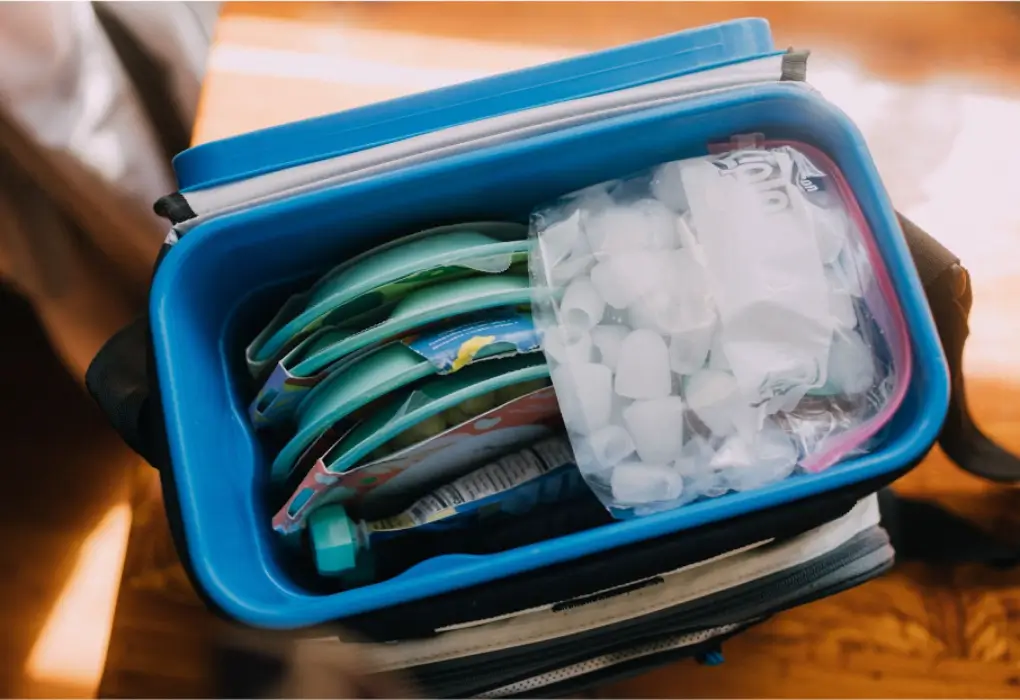
Once you’re ready to pack, nestle your frozen meals snugly in an insulated cooler and surround them with ice. Tight packing matters: gaps mean warm air, and warm air means faster thawing. The goal is to create a dense, cold environment that keeps everything frozen as long as possible.

For best results, use ice in zip-lock bags rather than loose ice or gel packs. If any ice melts before you reach security, you can simply pour out the water—a zip-lock makes that quick and mess-free.

3. Choose the right cooler

Size matters here—but not in the way you might think. A cooler that’s too large will have more empty air space, which warms up faster. Choose the smallest cooler that fits your meals, and fill any remaining space with extra ice or a small towel to minimize air pockets.

4. Breeze through TSA with frozen food

Here’s a trick that makes airport security much smoother: freeze it. Since frozen items are solid rather than liquid, they sidestep a lot of the ambiguity around liquid limits. Baby food in any form is still allowed, but frozen baby food is easier for TSA officers to handle and less likely to require extensive additional screening.

When you reach the checkpoint:

  • Inform the TSA officer you have baby food
  • Remove the cooler or food items from your bag to be screened separately
  • Keep your ice bags sealed—if they’re completely frozen, they’ll clear security without issue

If a gel pack is partially melted, TSA may flag it. Ice in bags gives you more flexibility because you can drain and repack on the other side.

5. Restock your ice after security

Once you’ve cleared security, stop at any restaurant or café past the checkpoint and ask for a cup of ice to refresh your cooler. Keep the lid closed until you actually need to access it—every time you open it, you let warm air in. Discipline here goes a long way.

Which Little Spoon Products Travel Well?

This technique works beautifully with:

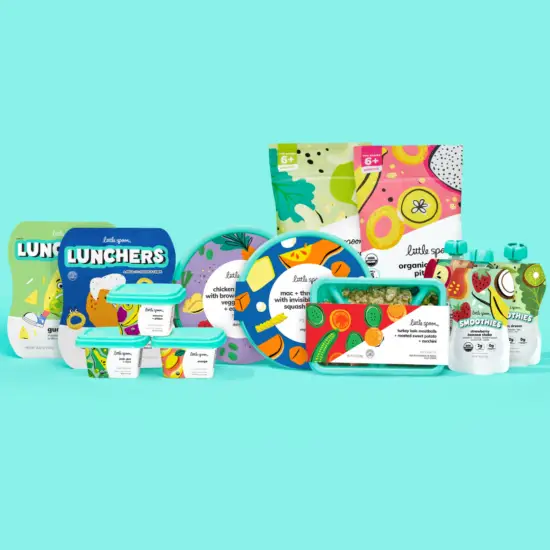
  • Blends — single-serve organic baby food purees, perfect for on-the-go feeding
  • Plates — freshly made toddler meals that heat up in under 3 minutes; great for planes and school lunches
  • Smoothies — kid-friendly, nutrient-packed drinkable meals

When packed frozen solid in a well-insulated cooler with plenty of ice, your Little Spoon meals should stay cold throughout your journey—ready to go straight into the fridge when you arrive.

Little Spoon Storage Guide: At Home and On the Go

Whether you’re planning a trip or just stocking up, here’s a quick reference for how to store Little Spoon products:

Blends + Smoothies

  • Fridge (unopened): up to 14 days
  • Freezer (unopened): up to 2 months
  • After opening: consume within 48 hours
  • Smoothies unrefrigerated: safe for up to 4 hours

Plates + Biteables

  • Fridge (unopened): up to 7 days
  • Freezer (unopened): up to 2 months
  • After opening: consume within 48 hours

Snacks + Puffs

  • Shelf-stable—store in a cool, dry pantry; reseal after each use

When traveling, keep the ‘48 hours after opening’ rule in mind. Pack only what your little one will eat within that window, and keep everything sealed until it’s time to serve.

Frequently Asked Questions About Traveling with Baby Food

Can you bring baby food through TSA?

Yes. TSA allows baby food in carry-on bags in quantities greater than 3.4 ounces. It’s treated as a medically necessary liquid and is exempt from the standard liquid limit. You’ll need to declare it at the checkpoint and have it screened separately.

Does baby food need to be in a quart-sized bag at TSA?

No. Baby food does not need to fit in a quart-sized bag. It can be in its original containers or pouches, in any reasonable quantity.

Can you bring frozen baby food on a plane?

Yes. Frozen baby food is allowed in carry-on and checked bags. If traveling with ice packs or ice to keep food cold, they must be completely frozen solid when you reach the security checkpoint (unless used with formula or breast milk, in which case any state is allowed).

How do you keep baby food cold on a long flight?

Pack meals frozen solid in an insulated cooler with ice in zip-lock bags. After clearing security, refresh your ice at any airport restaurant or café. Keep the lid closed unless you need to access the food.

How long can Little Spoon products be out of the fridge?

Little Spoon Smoothies are safe unrefrigerated for up to 4 hours. For other products, follow standard refrigerated food safety guidelines and minimize time at room temperature.

Can you bring Little Spoon on a plane?

Absolutely. Little Spoon Blends, Plates, and Smoothies are all TSA-friendly when packed correctly. Freeze them solid 48 hours before travel, pack in an insulated cooler with ice, declare them at security, and you’re set.

Ready to Pack?

Wherever you’re headed this season—across the country or across town—you don’t have to leave great nutrition behind. With a little prep and the right packing strategy, your little one can eat just as well on the road as they do at home.

Happy travels from all of us at Little Spoon.
 

We think you'll also love these...
A

Safety thresholds designed to help protect infant health.

Swallowing air during feeding, which can contribute to gas or discomfort.

Plant-powered omega-3s found in foods like chia + flax to support brain health.

Think: allergy triggers like eggs, dairy, peanuts. Introducing these foods early may actually minimize risk later.

Symptoms that may signal the need for pediatric evaluation.

An allergy involves the immune system, while an intolerance affects digestion.

The building blocks of protein + typically need to be obtained through nutrition. Kids need ’em for muscle development, tissue repair + healthy growth.

Nutrients like vitamins C and E that protect cells from oxidative stress—a cellular defense system!

A natural fiber source that keeps digestion running smoothly and supports a healthy gut.

That magical bond that makes your baby feel safe, secure and convinced you hung the moon.

Creamy, rich in healthy fats and perfectly designed for growing brains and developing eyes.

B

Letting your baby explore soft finger foods at their own pace. Messier than spoon-feeding, yes, but builds early independence.

Nature’s portable snack, packed with potassium and magnesium for heart and muscle health.

Quality checks on every single production run (formula, etc) to ensure consistency and safety.

Testing each production run to verify safety and quality.

A hardy, spore-forming probiotic that actually survives digestion to reach the gut where it matters.

How effectively your body absorbs and uses a nutrient. High bioavailability means more bang for your nutritional buck.

A sign worth calling your pediatrician about. May indicate a food sensitivity or other concern.

Little but mighty, packed with antioxidants that support developing brain cells.

Temporary resistance to taking a bottle, often linked to developmental changes or routine shifts.

Indicates packaging is free from bisphenol A, a harmful chemical that can disrupt hormones and affect development.

The natural way breast milk changes in composition based on time of day and stage of development.

Delivers fiber, calcium and choline—all key players in brain development.

A great source of calcium, potassium and vitamin A for healthy bone + eye development.

C

Partners in building strong bones and teeth. Vitamin D is what helps calcium actually get absorbed.

Rich in beta-carotene, which converts to vitamin A for eye health and immune support.

A formula with a higher proportion of casein, which digests more slowly.

A plant-based triple threat: protein for growth, fiber for digestion and choline for brain development.

An often-overlooked nutrient that supports memory formation and learning. Brain food in the truest sense.

Your baby’s natural sleep-wake cycle, influenced by light exposure and routine consistency.

Third-party certification recognizing exceptionally low contaminant levels and high safety standards.

A certification recognizing lower levels of certain contaminants based on testing.

The bacterium behind botulism, found naturally in soil and dust around the world.

Provides healthy fats that support energy and help absorb fat-soluble vitamins.

A developmental milestone where your baby’s brain suddenly processes information in new, more complex ways.

A method that uses high pressure instead of heat to preserve nutrients and flavor while keeping food safe.

Using both spoon-fed purées and self-fed finger foods.

Mixing feeding methods—breast milk and formula, or purées and finger foods.

Feeding your baby both breast milk and formula as part of their routine.

Using breast milk and formula together to support your baby’s nutritional needs.

Hard, infrequent stools that cause discomfort. Usually helped by increased fluids, fiber and movement.

An immune response to milk proteins that may require medical guidance and specialized formula.

D

A significant jump in cognitive or emotional skills.

Omega fatty acids crucial for brain, vision and cognitive development. Babies can’t produce enough on their own.

These two nutrients work together to build and protect brain cells more effectively than either alone.

Frequent, watery stools often caused by illness or food sensitivity. Monitor hydration closely.

A normal stage when your baby’s digestive system is still learning how to process food.

A late-night feeding while baby is still drowsy, designed to extend their longest stretch of sleep.

An imbalance in gut bacteria that can affect digestion and immune function.

E

Professional support for children showing developmental delays.

Minerals like sodium and potassium that regulate hydration, nerve signals and muscle function.

Temporarily removing a specific ingredient under professional guidance to observe changes in symptoms.

Fats the body cannot produce independently. Critical for brain and vision development.

F

Your baby’s way of communicating hunger and fullness—watch for cooing, head turning, hand sucking or pushing food away.

How your baby’s posture during feeding can influence comfort and digestion.

A temporary return to less mature eating patterns, often during illness or major developmental changes.

Sudden refusal to eat, commonly triggered by teething, illness or overtiredness.

Normal day-to-day changes in how much your baby eats.

Supports digestion, promotes regularity and feeds beneficial gut bacteria.

Precise hand and finger movements like grasping and pinching. The foundation for self-feeding.

Natural antioxidants found in colorful fruits and vegetables that protect cells.

A baby’s preference for how quickly milk flows during feeding.

Essential for neural tube formation and DNA synthesis, especially in early development.

When your toddler insists on eating only one food repeatedly. Usually temporary and not anything to worry too much about!

The period of time it can take for digestion to adjust when introducing a new formula.

The consistency of nutrition provided by formula, delivering the same nutrient balance in every bottle.

Understanding how to read a formula label so you can tell what is required and what is functional.

Gradual switching between formulas or from breast milk helps prevent digestive upset.

Gradually reducing formula intake as solid food consumption increases.

The process of adding essential nutrients to ensure babies receive what they need for healthy growth and development.

Foods with added nutrients to enhance their nutritional profile.

Proteins that are extensively broken down for babies with specific medical or allergy-related needs.

Ingredients added to support a specific nutritional or digestive role in your baby’s diet.

G

Common discomfort from swallowed air. Upright feeding positions and burping help minimize both. If formula feeding, swirl, don’t shake!

Slowly introducing a new formula to help support digestion and comfort.

Large movements like rolling, crawling and walking. The big developmental milestones.

Periods when appetite suddenly increases to support rapid physical development.

Brief phases of accelerated physical and mental development that increase nutritional needs.

The trillions of microorganisms living in the digestive system, crucial for health and immunity.

The two-way communication network between the digestive system and brain that influences mood and development.

H

Naturally occurring elements found in soil that can appear in food at trace levels.

A cold preservation technique that maintains nutrients and freshness without using heat.

Complex sugars naturally found in breast milk that nourish beneficial gut bacteria.

I

The body’s ability to mount appropriate immune responses—not too strong, not too weak.

The order ingredients appear on a label based on weight, not nutritional value or importance.

Adds bulk to stool and promotes regular bowel movements.

Whole milk proteins that remain intact and closely resemble the natural structure of proteins found in breast milk.

The gut’s protective lining that prevents harmful substances from entering the bloodstream.

Supports thyroid hormone production, which is essential for brain development.

Critical for brain growth and energy. Baby’s stored iron depletes around 6 months, making dietary sources important.

K

A vitamin C powerhouse that supports immunity and enhances iron absorption.

L

A rare condition in babies that is often confused with other digestive issues.

The side-to-side tongue movement that helps baby learn to chew effectively.

Sealing lips around a spoon or cup—an important skill for both feeding and speech development.

A flexible feeding rhythm that adapts to your baby’s cues instead of strict timing.

Plant-based antioxidants that protect developing eyes and support cellular health.

M

Supports nervous system function, smooth digestion, and quality sleep.

Rich in vitamin C and fiber, supporting both immune function and digestive health.

Language or claims designed to highlight certain features that may or may not meaningfully impact nutrition or digestion.

The profound identity shift that comes with becoming a parent. It’s real, ongoing, and deserves recognition.

Baby’s first dark, tar-like stool. Completely normal newborn transition.

Natural milk fats found in breast milk with membrane components that support brain and immune development.

The community of beneficial bacteria supporting digestion immunity and overall health.

The community of microbes living in the gut. A baby’s is still developing, which is why they are more vulnerable than adults.

Digestive discomfort related to milk protein without involvement of the immune system.

Natural variation in milk fat and protein that can occur based on sourcing, season and production.

Slippery strands sometimes visible during teething or mild irritation. Usually nothing to worry about, but check with your baby’s doctor if you have any questions or concerns.

A purple-hued potato (AKA “Japanese sweet potatoes”) packed with fiber and antioxidants.

N

Fear of new foods that typically emerges around 18-24 months. Gentle repeated exposure may help.

The speed at which milk comes out of a bottle nipple.

Made without genetically modified organisms.

O

The cognitive milestone when baby understands that things still exist when out of sight.

Coordination of mouth tongue and jaw muscles for safe eating and clear speech.

A certification related to how ingredients are grown, not a guarantee of digestibility or tolerance.

When exhaustion makes it difficult to eat or settle.

The state of being too tired to fall asleep or eat easily. A common challenge in infant care.

P

Proteins that have been gently broken down to support easier digestion.

Certified free from harmful agricultural chemicals.

Contains bromelain a natural enzyme that aids digestion and has anti-inflammatory properties.

A nutrient-dense fruit rich in antioxidants and magnesium for cellular protection.

Protein from beans seeds and grains that supports healthy growth.

When food is held in the cheeks rather than swallowed. May indicate texture challenges or oral-motor delays.

Beneficial plant compounds that protect cells from oxidative damage.

Crying after feeding that is often related to gas, overstimulation or tiredness rather than hunger.

Your body needs iron DHA and hydration too. ICYMI: self-care isn’t selfish. It’s essential.

The trifecta of gut health: food for good bacteria, live beneficial bacteria and their helpful metabolic byproducts.

Using consistent ingredient sources to help deliver reliable nutrition from bottle to bottle.

Offering food without force or coercion reduces mealtime stress and supports healthy eating habits.

Different species of beneficial bacteria each with unique health benefits.

How easily a protein can be broken down and absorbed by your baby’s body.

High-quality proteins from sources like milk and legumes that provide essential amino acids for tissue building.

Making safety and testing information available and accessible to parents.

Rich in zinc and magnesium supporting immune function and brain health.

R

Signs your baby is ready for solids: good head control sitting with support and interest in food.

Spit-up is common and typically comfortable, while reflux involves discomfort or pain.

Areas where food safety standards continue to evolve as research advances.

A feeding approach that follows your baby’s hunger and fullness cues rather than focusing only on ounces consumed.

Following your baby’s hunger and fullness signals rather than adhering strictly to schedules.

S

Signals that your baby is full, such as slowing down, turning away or relaxing their hands.

An antioxidant mineral that supports thyroid function and immune health.

Allowing baby to feed themselves builds independence and fine motor skills.

Activities that engage multiple senses to support development.

A normal developmental stage where babies become distressed when separated from caregivers.

How long food maintains safety and quality. We optimize this naturally.

Milk with most fat removed. Blended with whole milk it creates an optimal balance of fats proteins and carbs for growth.

The balance between solids and formula, with formula remaining a primary source of nutrition throughout the first year.

Forms a gel in the digestive tract to slow digestion and help stabilize blood sugar.

Delivers iron and magnesium to support oxygen transport and muscle function.

Traditional purée feeding that allows you to control pacing and watch for cues.

The dormant, inactive form of a bacterium. Like a seed, it is harmless until the right conditions wake it up.

A broad group of bacteria that includes C. botulinum. Testing for the whole group of works as an early-warning system, like a smoke detector.

An antioxidant-rich fruit that promotes healthy skin and immune function.

Clear communication about ingredient sourcing and production processes.

Your network of help. Parenting isn’t meant to be done alone.

T

The process of getting used to new flavors through repeated exposure.

Sensitivity to certain food textures common in toddlers and usually temporary.

Encouraging sensory interaction with various textures builds confidence and reduces pickiness.

The gradual transition from smooth purées to mashed foods to soft chunks.

Independent testing conducted by organizations outside the manufacturer.

An infant reflex that pushes food forward out of the mouth. Fades around 4-6 months.

The ability to track ingredients from their source all the way to the final product.

Greenish looser stool that appears as milk intake increases during the newborn period.

A golden spice containing curcumin known for its anti-inflammatory properties.

U

Certified grown without synthetic pesticides or genetically modified organisms.

The stage when baby begins grabbing and attempting to guide spoons—an early sign of emerging independence.

V

Essential for vision development immune function and healthy cellular growth.

A group of vitamins that work together to support metabolism and energy production.

A fat-soluble antioxidant that protects cells from oxidative damage.

Supports proper blood clotting and contributes to bone health.

W

Age-appropriate periods of wakefulness between naps. Respecting these supports calmer feeds and better sleep.

The two proteins in milk. Whey digests quickly, casein slowly. Our 60:40 ratio mirrors mature breast milk.

A formula with a higher whey-to-casein ratio that is sometimes associated with gentler digestion.

A plant protein source that also provides calcium and magnesium for growth.

Vitamins and minerals naturally present in real ingredients, not synthetically added.

Z

Minerals that work together to support nerve signaling and protect brain cells.

A power duo for immune health strengthening white blood cells and supporting tissue repair.

🔍